
All I gotta say is, it’s about frickin time.
 You all know this by now. The Mets have been without a proper No. 8 for almost 25 years in anticipation of a ceremony so many desperately wanted but was never scheduled. I’ve said it often enough — Gary Carter doesn’t belong with those who’ve had their numbers retired by the Mets so let’s get No. 8 out there again. It’s no disrespect. It’s actually respect. Respect for the dignity of the franchise after it pretends to have had a history loaded with players so iconic and great and associated with the team and the city that they need to be honored in this way.
 Well. let me say I like that Nick Morabito got No. 8 today. And it’s cool that AJ Ewing is wearing No. 9 when Brandon Nimmo is on the outskirts of what the Mets would now consider a retire-able uniform. Maybe something changed? Maybe they looked at themselves in the mirror. Maybe they realize that the best way forward isn’t to arrest the past in its tracks but set it free on the backs of the next generation. I love it I tell ya.
Oh shit, I just saw Matt’s comment below. They apparently “Torvee’d” this guy. Bullshit. Never mind
I’d like to take a second and welcome myself back, you almost lost me for good too but these young outfielder moves are exciting. Maybe they can give the next one 88 and say goodbye to the mistakes they shopped for over the offseason.
There’s nowhere to input the uni data anymore, unless someone out there wants to assemble a database that we can link here.
 How stupid is it that the Mets are retiring yet another number, and for a guy who played for six other teams than the Mets over 13 of his 20 years as a pro? I like Carlos Beltran as much as the next guy but that’s not the resume of an all-time Mets great, same as that of Dwight Gooden and Darryl Strawberry and God forbid, Gary Carter. It’s a fraudulent chronicle of greatness. None of those guys have the resume of a Pete Alsonso, who we may as well debate at this rate.
 When I’m appointed boss, I will do a really unpopular thing and revoke the retirements of these questionable all-time greats. I’m fine if you leave the number up there on the wall. It’s one place they can’t put an illuminated New York Presbyterian sign, and fans will know who they’re for, but Tyrone Taylor can still wear 15 if he wants. Ridiculous.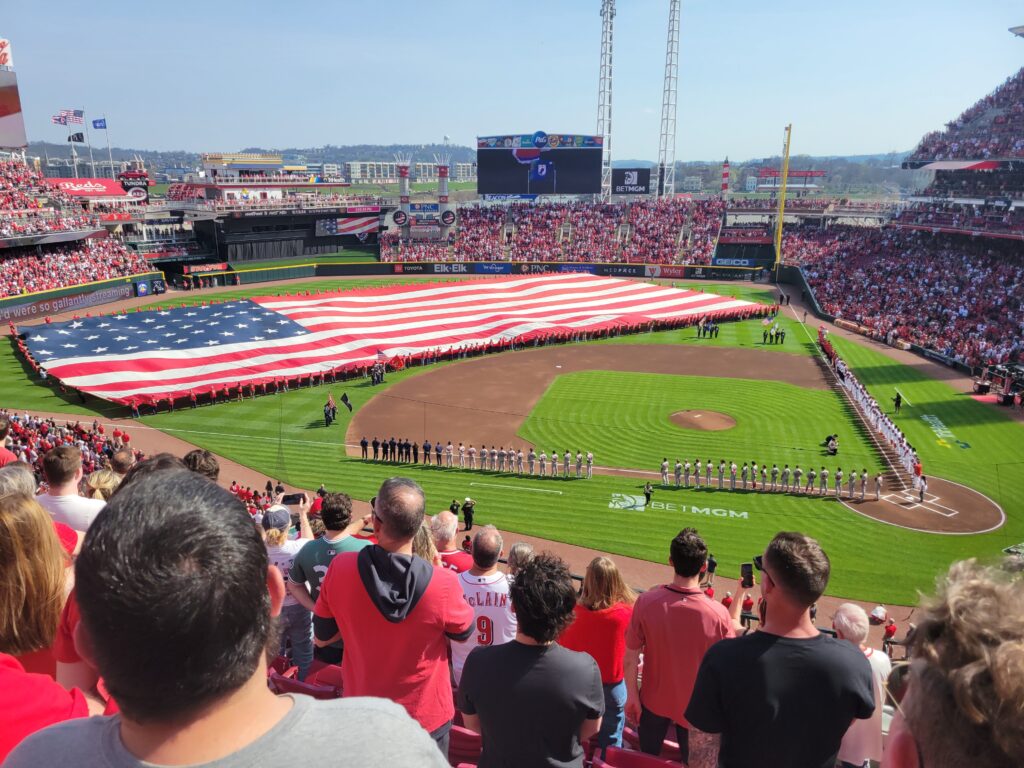
 I contemplated wearing my Tom Seaver Mets jersey to honor the former Cincinnati great but it wasn’t about me. The Reds’ starter, Andrew Abbott, wore 41 instead.
 Refilling the void for the moment are mostly fringe role players who we could see at times this year. No. 2, Vidal Brujan, may well be the starting shortstop on opening day and MJ Melendez could be the fifth outfielder.
 The intrigue is in who will wind up wearing No. 3 and when. Unassigned at the moment, it’s thought to be a carrot for young outfielder Carson Benge who is facing seemingly little resistance to an assignment in right field. Benge is wearing 93 in camp but he rocked 3 in college at Oklahoma.
 So another word about tickets. They did finally announce single-game tickets were going on sale, but only for games though June. It’s not enough to keep season plans limited to those requiring fans to buy more tickets than they can use, feeding the secondary markets which the Mets also get a cut of, but “make-your-own-plan” fans like me who’ve reliably occupied seats for decades, all on the hope that a good first half can what last year’s entire season couldn’t, and that’s drive actual demand for Mets tickets.
 When we finally get to the ballpark we’ll see Luis Robert wearing No. 88 and playing center, Freddy Peralta wearing No. 51 and probably pitching on opening day and maybe even Craig Kimbrel in the bullpen. As noted in the comments the roster shows Devin Williams taking over 38 but Tylor Megill still hanging in there fighting for it. Tobias Myers, acquired along with Peralta, is listed as 32. Brandon Sproat’s abandoned 40 appears yet to be reissued so maybe Megill winds up there. Kimbrel is a non-roster guy for the moment but has rarely been seen without wearing 46.
 Not that you’d necessarily want to, but you can’t buy a ticket to a Mets game this year. Well you can buy packages of 20 or 40 or 81 games, but the old-school a la cart single-game ticket window hasn’t opened yet, and they’re not saying when.
 I like Bo Bichette and happy the Mets got him and not Tucker. Right handed hitter, a batting champion candidate, hits lots of doubles. I’m not entirely okay with yanking third base out from under Baty when he’d finally had a decent year, but he hits well enough to play left.
 The Mets still need a pitcher. There are the top-shelf free agents like Framber Valdez but I kinda like the under-the-radar guys too. He struggled early last year with an injury but Zac Gallen has been pretty good for years. I’m also not afraid to bring in Justin Verlander or Max Scherzer again. I think the young staff could use the right veteran, a la Orel Hershiser in 1999. Besides I’ve never even heard of our pitching coach, Justin Willard. They don’t even have a mugshot of him on the official site.
 Whatever you make of the bloodless decision to let him go to Baltimore without so much as a competitive offer, New York just isn’t going to be the same place without Pete Alonso as part of it. That’s what bothers me most. I saw Alonso as a guy the Phillies and Braves feared, and the fans embraced as one of theirs doing walkoff interviews with Gelbs at the stadium, a goofy, reliable slugger who came through in some huge moments and built an insurmountable lead for home runs by Guys Who Wore No. 20. All the best for the Orioles who are one of my “back-up” rooting interests, although recently my heart’s been in Toronto.
 Luke Weaver? OK I guess. He’s going to wear No. 30, according to Mets.com. As previously revealed Semian gets the No. 10 once having belonged to Ronny Mauricio–Mauricio is listed in No. 0 now. Devin Williams still doesn’t have a number with the Mets–his customary 38 belongs to Tylor Megill, so we’ll see how that works out.
 Then there was the drudgery of keeping the data fresh. At some point, the work here became less about the Mets and more about chronicling whichever 13th reliever the Mets had up for the day. By the time he’s entered in, he’s gone, and I’m like anyone else looking up what number the next one is wearing on Mets.com. In a few days or weeks I’ve forgotten these guys even existed much less their predecessor in No. 68 or 82. Seems like, there was a time when obscure Mets had a story behind their obscurity. Now they’re too damn ephemeral, and even where the job is writing it down, my memory cannot fit any more Richard Loveladys or Jonathan Pintaros.
 In a season without a lot of pleasant surprises you gotta be pleasantly surprised at how awesome Nolan McLean‘s been through three starts. Steve Cohen in fact has already decreed to retire No. 26 in a ceremony next season. But before that, we’re getting a potentially better young pitcher in Jonah Tong, whose motion recalls Tim Lincecum and who’ll be wearing No. 21.
 I ran into friend of MBTN