
 When Howie Rose was asked to write the foreword for Mets by the Numbers, he had little help from us since the book, by that point, had barely been written. So when he hit it out of the park on the first swing – I don’t think we had to change a single word and it was a perfect fit stylistically – it was at once a relief and then again, not all that surprising. That’s because Howie knows his stuff. We knew that, and if you listen to his broadcasts, you know that too. Howie approaches his assignment as the Mets’ primary radio voice armed with knowledge of the tiny details gleaned, as he explains in the interview below, over a lifetime of fandom aligning nearly perfectly with the history of the team he covers. That he eventually read the book, and hasn’t disavowed his association with it yet, is as gratifying a recommendation as it has received yet.
Can you discuss how you became a Met fan?
I go back to the very beginning. I became a baseball fan in 1961. I was seven years old. My father was a rabid Yankee fan. And my earliest memories of baseball were with my father at Yankee Stadium. When 1962 rolls around, and there’s a new team called the Mets, I really feel that they were created just for me. I’m 8 years old, a brand new baseball fan. My family had moved from the Bronx to Queens, just a quick bus ride away from Shea Stadium. I thought the whole thing had been set up just for me. I literally remember day one. I was too young to stay up and watch the game – they were in St. Louis and an hour behind us and I remember going to sleep knowing that the Mets were playing, but not knowing the score until I got up the next day. I went into my parents’ room, and asked my Dad how’d they do? He said they lost. I remember being disappointed and I was on my way from there.
No problems going against the rooting interests of your dad?
Not really. He got a kick out of it more than anything. My grandparents, and my Dad’s sister, and my cousins, lived very close to Yankee Stadium, literally walking distance, right across the street. So it was not at all uncommon for us to combine a visit there with a trip to Yankee Stadium. I remember visiting in 1964. The Yankees and Orioles were in pennant race that summer, and we went to a double-header there that if not sold out, was close to it. As we’re walking up the ramp with my cousin and my Dad I said, “It looks like a capacity crowd today.” My father looks at me and says, “Capacity crowd?! You must be watching too much of those Mets games.”
That was the truth then. Shea Stadium would sell out a whole lot more than Yankee Stadium would.
What was the point at which you became more conversant with the minutia and the details and the trivia of Met fandom?
You got to remember, being the age I was when the Mets were born, I lived through the trivia. It was more a case of remembering things from first-hand experience or watching it on television, or just a product of having been a fan and remembering what happened in any given game. It’s always come naturally. Most of my friends were also Mets fans.
I just emailed an old friend of mine. I thought of him and his brother the day the Mets made the Santana trade. I said, “We never dreamed up a trade this good except in Windsor Oaks,” which was the garden apartment complex in Bayside, Queens where we grew up. We literally used to sit around and dream up Mets trades.
There is one game in particular I recall. It was 1966, they were playing the Giants and Juan Marichal was pitching. They were losing 5-0 in the seventh inning and Marichal is working on a perfect game. In the bottom of the 6th inning, two out, Wes Westrum is going to letDennis Ribant, the starting pitcher, hit! What are you doing that for? And wouldn’t you know it, Ribant hits a 38-hopper through the middle for a base hit. And the Mets end up winning the game when Ron Swoboda hits a pinch-hit home run in the bottom of the 9th inning. We were so excited, on my way back from the ballpark that day, I said this is the greatest ballgame I’ve ever seen. The greatest I ever will see. And I’m always going to remember this date: August 4, 1966. As a 12-year-old, it was momentous to me. I would always do things like that, and it helped my recall.
That recall obviously helps you as a broadcaster, in what I imagine is your dream job.
 It is a dream job in every respect. There got to be a point during my teenage years where I realized I wasn’t going to achieve the dream of being a professional ballplayer. And I had a natural passion and affinity for broadcasting. It came to pass where, when I was at the game and big things were happening, where it was probably natural for most kids to be thinking, “I wish I was on the field,” I would think, “I wonder what Bob, Lindsey and Ralph are saying.” My eyes were on the booth every bit as much as on the field. To have had the chance to work with Bob and with Ralph – I never got the chance to work with Lindsey – is very, very humbling and a source of enormous pride for me. Those guys were every bit the role models to me as Seaver, Koosman and Harelson and the rest of them were.
I read were you’ve said you are partial to what you call the traditional look of the uniform. But what of those who came up in a later generation and to whom the racing stripes are the traditional look, or even the black is a traditional look?
I’m sensitive to that. And there marketing realities of all sports today where there are so many revenue streams available to teams they never realized they’d had before back in the days. So I understand why uniforms change now and then. But I deeply, deeply believe in continuity and tradition and the continuum that is following the traditional franchises in baseball along with uniforms that barely change at all. The Red Sox have tweaked theirs over the years, the Yankees and Dodgers and the Giants are back to traditional roots and I personally find them the best to look at because they connect all the memories.
That’s the thing. Because I go back top day one, the closer they look, stylistically, today to 1962, the more everything ties together across the generations. I know it’s kind of corny, and a small thing in the grand scheme of things, but I think teams in all sports should harp on their history and the fan base and the continuum that following a team from youth to adulthood represents.
You might not have become the ballplayer you aspired to be but if you had, what number would you have liked to have worn?
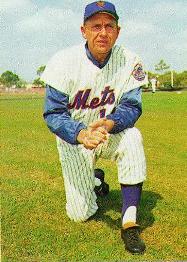 I wore 8 in Little League because that what they gave me, and I kind of liked the look of it. But if somebody gave me a Mets jersey today and asked me what number I wanted on it I’d tell them 14. Absolutely for Gil Hodges. I’d wear 14 sometimes but if I put my name on the back people would think I was rooting for Pete Rose, No. 14. We’re obviously not related. I remember Gil at the end of his playing career and I’ll always have the utmost respect and admiration for how was able to turn the team around and win the World Series in ‘69 and I think still, even among the players, he’s probably one of the five most influential people in the team’s history. He should be revered and canonized by all Met fans.
What are your thoughts on Citi Field?
Looking at it from the perspective of someone who travels to all the ballparks, virtually every park we go to is modern, state-of-the-art and offers all the amenities you would want in a 21st century ballpark. So, as much as I love Shea, and realize it’s been home for all these years, when we come home after being where we’ve been, it’s kind of a letdown. I have been very envious over the years with these new facilities, so I’m excited that we’re going to have one of our own. I don’t mind that it looks somewhat like Ebbets Field at all. I wish I’d gotten to Ebbets Field in my life, but I was a little too young. Fred Wilpon has a relationship with the Brooklyn Dodgers. He threw batting practice there. That was his passion. And I understand his wanting to incorporate some of that into Citi Field and the Mets themselves.
Most fans know you from your work as a broadcaster with the Mets, but some recall you as well as a terrific talk show host. Do you have some thoughts on why it’s so difficult for listeners to find a host that will engage fans, talk intelligently and understands New York?
Things have become so contentious and filled with attitude that I wonder if there’s a place for something a little more highbrow. I don’t mean that in a condescending way; it just seems like there is so much today that revolved around negativity and attitude.
I’ve been criticized at times for being contentious and argumentative with callers and that’s part of it. But now there’s an inherent anger that they feel the need to transmit. I’m not sure how we get away from that, quite frankly. I think things might get more pronounced before they start to improve. But I think it’s possible to do a show without that. Joe and Evan can do that. They don’t bring that lowest common denominator to it. And Mike and the Mad Dog are great, they’re the Gold standard.
You can have a little Don Rickles in you without being overtly personal toward the one you’re talking with. But some guys have reached far too low in terms of attitude.
I know your schedule probably precludes this, but would you be interested in doing another call-in show?
Knowing what I know now and having been through it, I don’t think I’d be comfortable doing a show while I have an affiliation with a team. I think the best way to do a show is to be unencumbered, unattached, and feel free to criticize and opine with no fear of being accused of having an agenda or having to pull your punch. I went though that. It cost me dearly. And I’m too old for that kind of aggravation. I would much prefer one or the other.
You’re working with a new partner this year. Do you know Wayne Hagin?
I know him through the community of broadcasters. We all tend to chat with one another. Usually before the first game of a series we’ll get together and share some insights and get each other up to snuff. So I’ve known Wayne in that context for a number of years.
I was curious to know whether as part of his audition they put the two of you together and see how you worked first.
 We didn’t do that. We’ve both been around long enough to be able to mesh without too much difficulty, although sometimes those things take time. You need to get a sense of the other person’s style and what they’re comfortable with. If I’m doing play by play I want to know when he’s most comfortable jumping in so I can give him the space he needs, and the same with me. I need to know where I can find an opening without stepping on his toes. Our broadcasts more than most are a product of the symbiotic relationship of the partners than a lot of others, where it’s your inning and my inning. That’s not how we do it. When I worked with Gary and Tom, it was more of a conversation. From that standpoint I was very lucky to mesh with Tom right away, and I hope I can mesh with Wayne just as quickly.
How soon will you be able to work together?
The Islanders schedule can really complicate things, but it is what it is. I’ll be able to be down in Port St. Lucie for three days and get in tune with things. I’ll be ready for opening day but I’ll wish I had more innings with Wayne this spring.
One or two games you recall fondly as a broadcaster?
The night they came back after 9/11 turned out to be a much more profound experience than I thought it would be because after the attacks, I was ready to shut down baseball for the rest of the season. I had no stomach for it and felt that where we were nationally had so much pain and hurt and anger and depression, I couldn’t see myself getting into the outskirts of a pennant race, which is where the Mets were at that time. If they canceled the season on Sept. 12 that would have been fine with me.
 So when they came back to New York, I wasn’t prepared, and it turned out to be one of the most profound, emotional, nights of my life. I was doing TV that night. When Piazza hit the home run in the bottom of the 8th inning, we showed a shot on camera of a couple of uniformed firemen, and they are smiling and jumping up and down and celebrating the home run in the picnic area. And I thought to myself, I have no idea what firehouse these guys are from but in all likelihood these two men in the last 10 days lost comrades, friends and perhaps even family, and amid all that devastation, and with everything we’d been through as a nation, and everything that those two guys had been though, that we can take respite and solace in a home run in a baseball game, that however short it lasts, put that misery out of their minds for a split second and get a little pleasure. It reinforced for me the power of sports and especially baseball in this country. And that’s when I knew it was the right thing to do to come back and play. That’s at the top of the list.
When they clinched the division in ‘06, even though it was a foregone conclusion, to be behind the mic at that moment brought me right back to Sept. 24 of 1969 when they clinched the division for the first time, and I actually welled up a little bit. My mind took me back to being at Shea as a fan when they clinched in ’69 and I got a little emotional. That’s the connection, the continuum I always talk about. I was able to enjoy that moment in ‘06 in conjunction with what I’d experienced as a fan in ‘69, and to have that all tied together was a great moment for me.
I imagine it was pretty difficult then to call it last year, though probably a good test of your journalistic chops also.
It’s easy to get caught up emotionally when the team is doing well but you still have a responsibility to maintain perspective and balance between the reporting you’re supposed to do and the emotional pendulum no matter how it’s swinging. I think, and I heard from people in and out of the organization, that Tom and I had the right balance last year.
It was incredible to watch it unfold because you kept thinking they were just a game away from turning it back around. Only, it just never happened. Until the top of the first inning of the last game of the year, I never sat back and said, they might not make it. Even with all of that, the Phillies could still have lost and there would have been a playoff game. But the Phillies didn’t cooperate. Full marks to them: They earned it, they took it. It was there for them and they grabbed it. They deserve all the credit.
 The following events and appearances are scheduled around the release of the
  The Mets on Thursday reassigned longshot reliever candidates
  When the Mets play the White Sox in the annual Civil Rights Game exhibition March 29 in Memphis, they will wear special uniforms to commemorate the event. According to a news item today on Paul Lukas’s
  They’ve given us a lot more to think about over the years. haven’t they? I suppose I get used to all of them after a while. When they first showed up in 1998 in all this black and orange, I thought they looked like Orioles and needed to get back to emphasizing the blue. Plus it was obviously a craven attempt to make a buck. But, y’know what? Last April, the first time they put the black unis on for the first time, I viewed them as a throwback to the ’99 and 2000 teams. Now when I see the Mets in black, it gives me a warm feeling — nostalgia, I guess, for the Bobby Valentine era when they wore them more frequently. I guess that’s the power of the baseball uniform in general.
 One of the things that drew people to us is we were able to do a lot on
 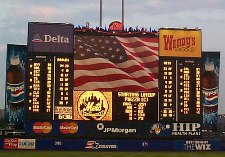 That was also a touchstone in how I view Shea and how I write about it. Because until then, I was ready to throw Shea away. I’d been to 30 ballparks and wanted our own Camden Yards in my lifetime. I recall writing something on opening day ’05 how they had all winter and couldn’t get the escalators to work. Jason was thrilled because for years he was like “Where’s the detonator?” But I’d come over to the dark side.
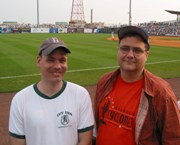 I saw the future of rock n’ roll and his name is Bruce Springsteen.”
 That was a thing I got into during the 1999 and 2000 playoff pushes. I basically wrote to everyone I knew who was a Mets fan, and some people after that added their friends and it kind of grew from there. There were some people from the media who got involved, including a bunch at the New York Times. It was a great way to share the angst and the excitement and dwell on Todd Zeile. You asked out of it at some point later when it got, as you said, just too geeky [I don’t recall this, but when in doubt, trust Greg’s memory – ed.]. There are still about a dozen people in that cell. All of that set the stage for the blog, I suppose.
 Maybe there’s a whole community of Miami Heat fans out there I don’t know about that feels and acts the same way, but to me, being a Mets fan feels unique. It’s not just about “we won, we lost,” it’s about the emotions. By reluctant comparison, I remember somebody sending me an email chain that was going around from Yankee fans when they got Giambi in 2001 and it was so dry, no soul whatsoever. “Hey, I think he’ll be a good hitter. Hey, I think he’ll play first base.” That was when our Mets email cell was going hot and heavy and the Mets were on the verge of trading for Mo Vaughn. Vaughn’s long gone, but our correspondence was a lot more entertaining.
 I do keep a log
 The problem with trying to read a columnist today in this age of blogs is it’s obvious the columnist does not think about the Mets nearly as much as we do and goes on to show what an astounding lack of understanding he has for the subject. John Harper, who co-wrote one of the great books on the Mets, The Worst Team Money Could Buy, wrote an absolutely insipid column not long after the season ended on why the Mets had to trade Jose Reyes for Johan Santana – all contingent on throwing money at A-Rod – and he wasn’t going to let good sense get in the way of his narrative. Not to pick on Harper, but it struck me as a rather typical effort: “The Mets will never be as big-time as the Yankees, so they should let go of one of their few assets for somebody the Yankees want.” All praise Omar for not listening.
 Part of it was that in addition to watching the Mets, I was watching my one-year-old climb the stadium steps and call out the row letters. Part of it was the realization that these weren’t even the Mets but parts of their A, AA and AAA rosters. Of the “regulars,” only
 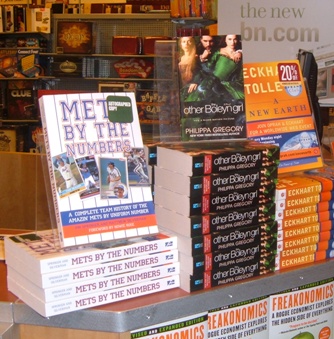 The official release date for the
  Are there particular Mets numbers you have specific associations with?
 That turned out to be such a bad trade, for Rick Reed.
 Milner was lazy. He had a bathrobe that was Howard Johnson colors: orange, turquoise and white. He could have gone 60-for-60 in the previous weeks but if he had that bathrobe on, he wasn’t playing. If he had gone 0-for-48 and didn’t have the bathrobe on, he was playing. He wouldn’t say anything. If he had the bathrobe on he’d just walk away. Not a nice person. He once had a wine bottle by the neck and threatened me with it. I called him “the Hamper” not the “Hammer.”
 Slightly? Hernandez was the best player I ever covered. He made his team win more than any other player. He was a good interview, and we’re friends today, but when he played he never, ever gave me stuff. I still get on him for that. He never helped me! He gave me nothing. I don’t care if you didn’t give it to anybody… give it to me! Keith would give you opinions but wouldn’t give you facts. I don’t think he gave anyone facts.
 I get along great with Willie. I’ve known him since he was a baby. But I have to be by myself. If I’m by myself he’ll tell me anything. But in a group, once in a while I think I can read him.
 What’s your sense of Charlie Samuels’ power in the clubhouse?
 Seemed that he could have been a more useful offensive player than he turned out to be.
 Ryan Thompson, for sure. But not Jeff Reardon. Payton was a line-driver. I’m still disappointed at the career he had because I thought he was going to be a stunning player. He lost significant time to injuries. To miss two years when he should have been learning in the minors was a shame. He and Paul Wilson were very hard workers, it’s a shame that so little went their way.
 Well this was 300 wins and for Fonzie the equivalent would have been 3,000 hits and he wasn’t close to that. To some extent these things are about selling tickets. The Yankees had Elston Howard’s number retired to sell tickets. Obviously the last game will stay with his image forever. But without him, they don’t have a chance and I don’t know how they’re going to replace him.
 I think the Milledge trade was 97% baseball and 3% they didn’t have the same sense of reluctance they would have had had he not shot his mouth off and done stupid things. It’s been little things with him from the day they got him. But he never got it, and I don’t think they believe he ever would have.
 Wright seems to me that kind of guy who’ll accommodate anyone with a microphone and a notebook.