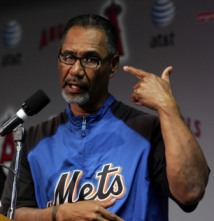
I’ve given it some thought, and if there’s a downside to Chip Hale‘s potential ascendacy to Mets manager it’s that the team would be left trying to replace its best third base coach in years. Seriously. We’ve seen Razor Shines and Sandy Alomar Sr. sentence dozens of rallies to die at home plate, and others to never start, as they got too lazy, overexcited or panicy. It’s a difficult job requiring concentration, awareness and flash decision-making under pressure, knowledge of the players and of the enemy, the nerve to be aggressive when warranted and the courage to put up the stop sign. Chip Hale demonstrated he was better than most that we’ve seen.
Bobby Valentine was an excellent third-base coach for the Mets and of course eventually became a hell of a manager. I’m thinking now that if the new brass values a bright guy in charge (and they do) they could do worse than Hale, whose ascendancy to the Final Four has already overcome a lack of name recognition, Major League managing experience and strong Met ties. He probably does however have more intimate knowledge of many of the ballplayers on this team now, and would probably work for less than his co-candidates. I also like the idea of a guy who could become a good manager while managing the Mets, the way Davey Johnson did.
Walter William “Chip” Hale has six years of managerial experience with the Diamondbacks organization, culminating in a Manager of the Year coronation in 2006 with the Tucson Sidewinders of the Pacific Coast League, who won more games than any minor-league team that year. He is credited with helping shepherd Conor Jackson, Carlos Quentin, Stephen Drew and Chris Young to the big leagues. His Major League coaching experience came under co-candidate Bob Melvin in Arizona: I wonder if the parties would be amenable to Melvin bench-coaching for Hale.
Hale wore No. 51, like a good coach should, for the Mets last year but I tend to favor managers with enough juice to wear their own digits if possible. Hale wore No. 4 most often as a ballpllayer but also suited up in 58, 12 and 5. His big-league career consisted of utility infield roles with the Twins and Dodgers. His best skill appeared to be the ability to take a walk.


 Isn’t just like the Mets that they needed to be the dumbest team in baseball for five years before they realized they might need to be the smartest? They’re like George Costanza, author of the above title line, upon the realization that his own instincts had become so untrustworthy he needed to openly defy them by doing just the opposite of what they favored. The Mets have a long history of such behavior, whether it’s sitting on their hands whille the bullpen burned to the ground in 2008 then spending the offseason stuffing the roster with high-profile relievers; responding criticism of moves like the Scott Kazmir trade by aggressively promoting 19-year-old hard throwers to the majors; answering their near-complete tone deafness to the will of fans with regards to the new park by
 Samuels had served as Met equipment manager for 27 years; needless to say he’s a figure whose influence on my little project here commands a good deal of respect. If you wanted to know why this player was issued that number; or why that other guy changed numbers; or what the deal was with those revolting black unis, he was the man to talk to. Only, he didn’t talk much: Through Mets officials, Charlie declined numerous requests over the years to be interviewed for this site and for the Mets By The Numbers


 895:
895: